Minnesota Food Shelves See Record Use For Fourth Consecutive Year
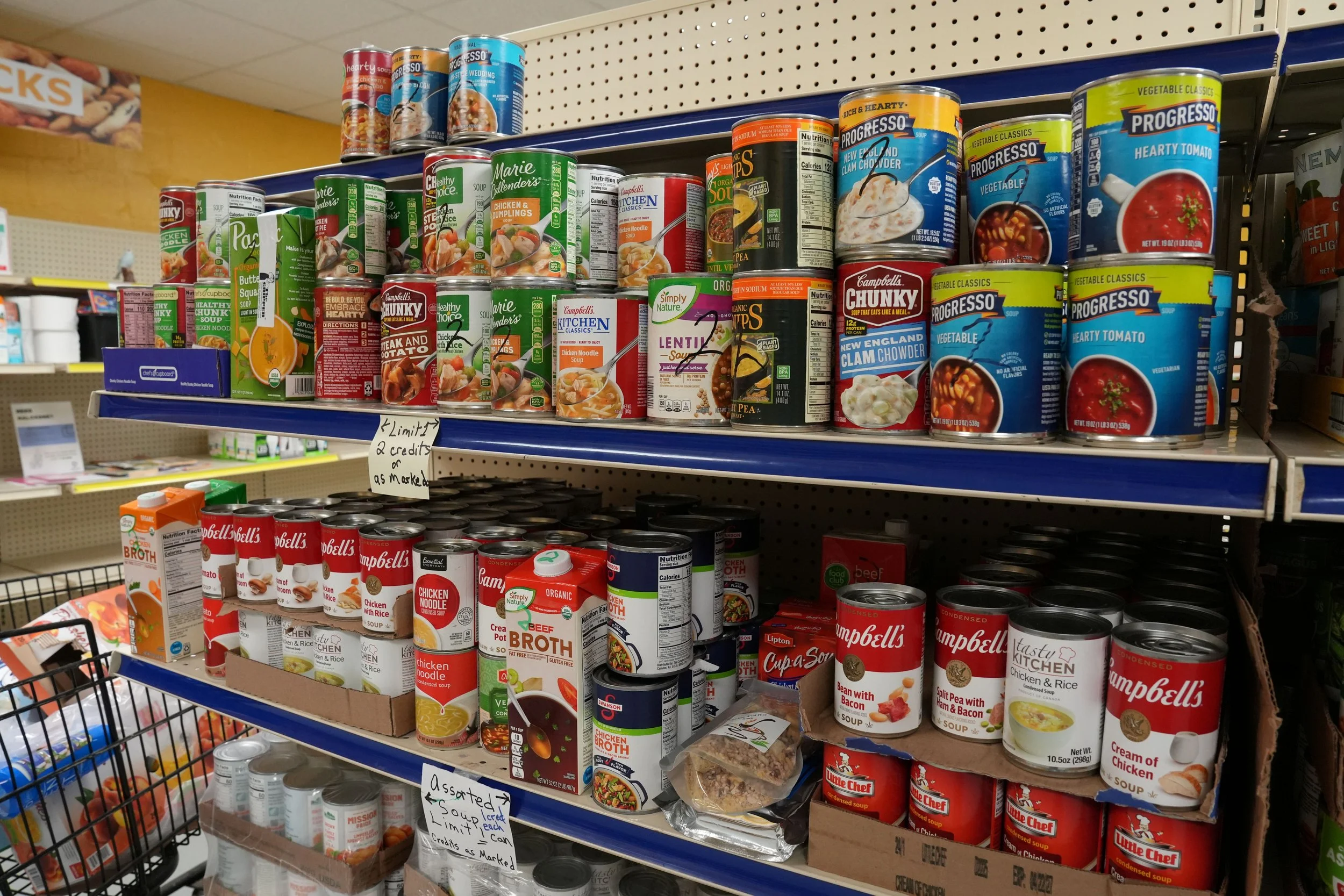
Inside of Churches United’s Dorothy Day Food Pantry, located at 1308 Main Avenue in Moorhead.
Food shelves across Minnesota are seeing record numbers of visits, a trend exacerbated by the COVID-19 pandemic. The data comes from The Food Group, a food equity nonprofit based in Minneapolis that gathers information from food shelves across the state.
The Food Group says over 9 million visits to food shelves were made in 2025. That is over 2.5 times more visits than pre-pandemic figures in 2019, five times higher than in 2004, and a record high for the state. The nonprofit attributes the increase to several factors: price increases, barriers to access, and federal assistance cuts.
The Food Group cites data from The Consumer Price Index, which shows the same $100 in groceries in December 2019 cost $131 in December 2025. The U.S. Department of Agriculture also pointed to multiple increases since 2020. The USDA says the most recent driving causes of cost increases include the COVID-19 pandemic, an avian influenza outbreak in 2022 that greatly impacted egg and poultry prices and supply, and the Russia-Ukraine war contributing to economy-wide energy and food inflation.
Food access barriers also persist across Minnesota. The Minnesota Food Shelf Survey says 48% of nearly 9,800 food shelf shoppers had difficulties accessing local food assistance services. The Food Group says barriers identified include communities with low or no access to grocery stores or public transportation and infrastructure projects leading to temporary food access disruptions in historically Black and Brown neighborhoods. Additionally, The Food Group cited recent immigration enforcement actions which impacted communities, leading to food access challenges.
Federally, The Food Group says uncertainty around SNAP services under The Trump administration led to a higher demand. An estimated 277,000 additional households sought food shelves in October of 2025 compared to October of 2024. A similar figure was noted in November, with 270,000 more households seeking food shelf services in 2025 compared to November of 2024. The Food Group says an estimated 32,000 families and seniors were at risk of losing some or all food support due to federal SNAP changes to work requirements and time limits. The changes went into effect November 1, 2025, under the signing of H.R.1 earlier in the year.
Food shelf sustainability was also challenged in Minnesota between 2024 and 2025. Due to a reduction in available free food from federal programs like The Emergency Food Assistance Program (TEFAP), food shelves distributed less food. Despite a total of 150 million pounds of food being distributed to households throughout 2025, a total of 3.7 million fewer pounds of food was distributed compared to 2024 even with the increased service usage.
“November 2025 was an especially scary time for us. There were days where we finished our distribution with bare shelves,“ said Pastor Devlyn Brooks, CEO of Churches United. “Our neighbors, housed or not, come to us for security and consistency at their dinner tables.”
In response to the increased demand, advocates are pushing policy positions. Earlier in March of 2026, approximately 300 hunger relief advocates met with Minnesota state lawmakers to discuss potential legislative priorities, according to MPR. Those priorities included increased funding for the Minnesota Food Shelf Program and support for a regional food bank grant to allow more food to be distributed to food shelf partners.