Local residents share expertise, lived experience, on homelessness panel
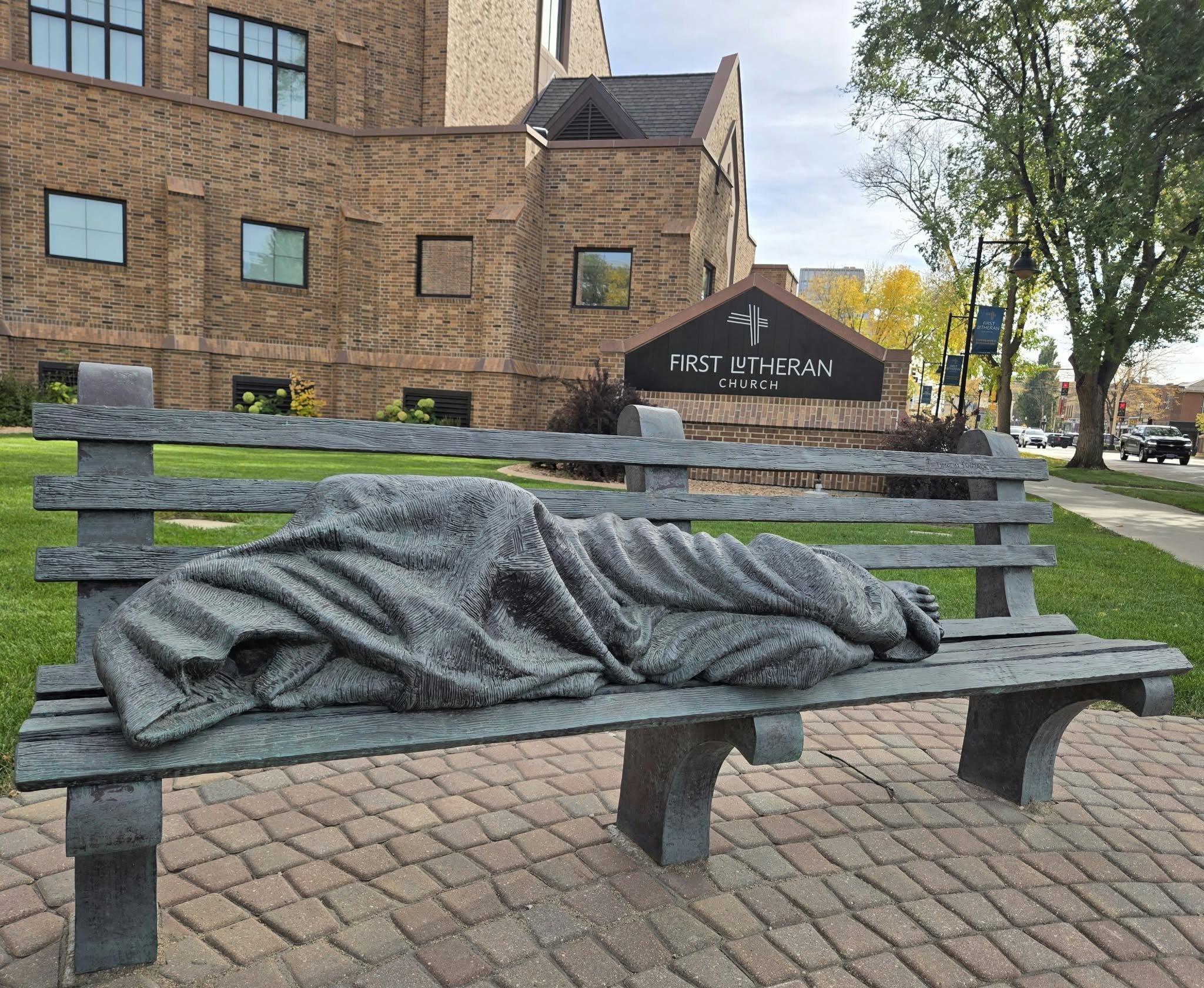
A status of Jesus outside of First Lutheran church at 619 Broadway N, Fargo.
FARGO — Local residents who have experienced homelessness shared their advice on how the homeless response system in Fargo-Moorhead could improve during the ‘Getting it Right in the Call to End Homelessness’ event hosted by First Lutheran Church on October 3.
Organized by Director of Mission Polly Kloster, First Lutheran’s event brought together people of faith, homeless service organizations, and more to learn how to best address the rising number of people experiencing homelessness both locally and nationwide. It was sponsored by Churches United, the FM Coalition to End Homelessness, and the New Life Center.
Chandler Esslinger, Executive Director of the FM Coalition to End Homelessness, thanked members of the lived-experience panel for helping find solutions that work.
“Let’s make sure we are maximizing all our time… in service of ending homelessness,” Esslinger said.
The importance of lived experiences
Mandy grew up in Grand Forks but she has spent so much of her life in Fargo that she considers it her hometown. She experienced homelessness in Fargo for almost 5 years.
People should know that everyone experiencing homelessness has a unique story and journey to housing, she said.
What kept her going while she navigated homelessness was support from other people experiencing homelessness and the Fargo-Moorhead services for people in crisis. People experiencing homelessness helped her learn to navigate life on the streets, offered her friendship, and helped her stay safe. Service agencies provided her with the daily things that most people take for granted: clean laundry, showers, and food.
“Even saying hello or a smile helps people who are homeless,” she said.
Once she got housing it took a long time to overcome feelings of loneliness while living on her own and readjust to feeling safe.
On her journey to housing, Mandy found that she connected most with service providers who have also been homeless at one point in their lives. Having more people with lived experiences of homelessness in leading roles is important, she said.
Fargo-Moorhead also needs more care coordinators and peer support specialists, she said. Currently, there aren’t enough to provide services to everyone.
When she was seeking housing, communication was a huge barrier for her because she didn’t have a phone or a consistent place to stay so people could find her when they needed to update her about her housing application. Going forward, it would be more efficient to have a list of all the people who need to update their housing application at every organization that serves people experiencing homelessness, she said, so people in homelessness can routinely check to see if they need to go update their application.
Fostering hope through communication
Likewise, Robert said that a lack of communication regarding his place on the housing waitlist was not only a barrier to finding housing but also very hard on the spirit.
“You kind of lose hope that you’re going to get housed and you find comfort in your addiction or coping strategics,” he said.
When you’re in crisis it’s very hard to give up those coping mechanisms, he said.
He got his housing in 2019, but it was a long road.
While experiencing homelessness, he found housing application fees to be a huge barrier. Every time his application was denied it felt like he was throwing away money.
It would be very helpful if housing authorities would do more regular check-ins with people on the housing waitlists, he said, to ensure people know where they are in line. When updates are few and far between it’s easy to lose hope, he said.
“If you feel like the system in general has kind of given up on you, you’re not just going to trust the system,” Robert said.
It took him years to adjust after he got housing.
“It takes a long time to forget that you are homeless,” Robert said.
Now, he is in active recovery and does what he can to support the “robust” homeless response system in the Fargo-Moorhead metro.
He is also working towards a career on cargo ships to fuel his love of travel, but plans to keep a place in Fargo to come home to when he has time off work.
“Home is where the heart is,” he said.